More Mountain, Less Money and Fewer Crowds
Choosing an off-peak ski holiday can mean lower prices, quieter pistes and more mountain to enjoy. For many families, couples and groups, travelling outside the busiest school holiday weeks can offer better value and a more relaxed experience, but there are compromises to consider too. From January snow and March sunshine to taking children out of school, here’s why skiing off-peak might actually suit you better.
What Do We Mean by Off-Peak?
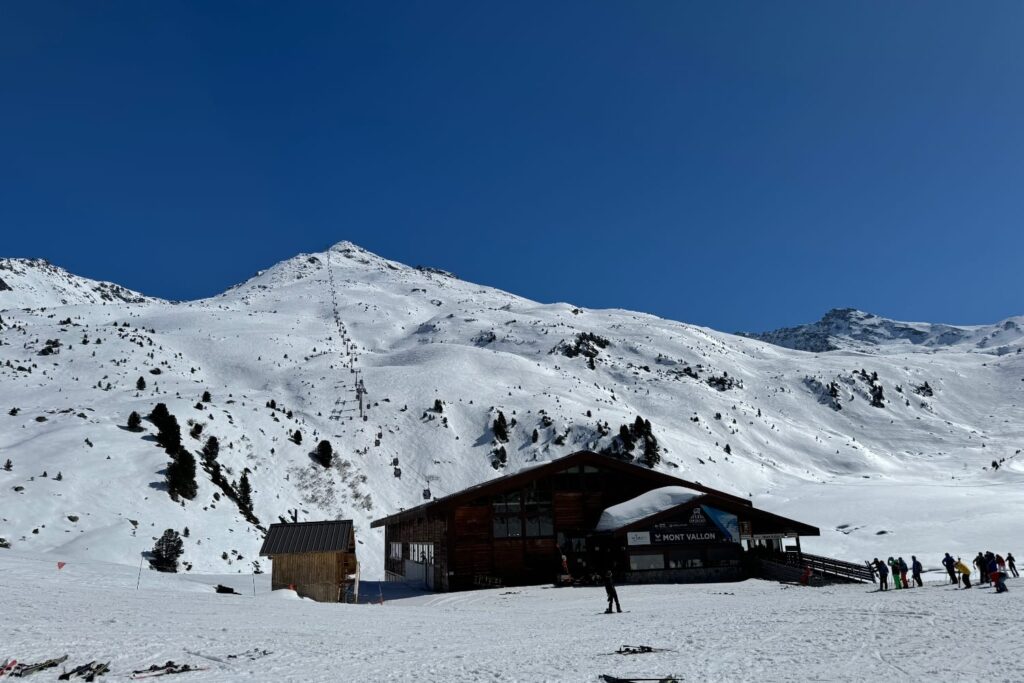
In the French Alps, demand rises significantly around the major European school holidays. Christmas and New Year, the February school holidays and, depending on when it falls, Easter are generally amongst the busiest periods. Outside these dates, the mountains can feel remarkably different. January after the New Year rush is one of the obvious examples, while March can offer another fantastic window once the February holiday crowds have departed. And quieter certainly doesn’t mean everything is closed. The lifts are running, ski schools are teaching and restaurants are open. You’re simply sharing them with fewer people.
Better Value for Money
Perhaps the most obvious advantage is cost. Demand for ski accommodation during peak weeks is extremely high and prices reflect it. Travel outside these periods and chalet and apartment prices can be considerably more attractive. But there’s another way of looking at it. Instead of simply spending less, you could spend the same and get more.
The chalet you love but can’t quite justify during February half-term may suddenly fall within budget in January or March. You might be able to upgrade from an apartment to a chalet, choose catered rather than self-catered accommodation, secure a ski-in/ski-out location or treat yourselves to a luxury property with a hot tub, swimming pool, sauna or cinema room. For larger families and groups, where accommodation represents a substantial part of the overall holiday cost, that difference can be particularly significant.
It’s Not Just the Chalet
Accommodation isn’t the only cost affected by demand. Depending on your dates and departure airport, flights can be significantly more expensive during school holidays. Car hire and airport parking can also increase and there may be greater demand for airport transfers, ski school and equipment hire during the busiest weeks. Restaurants won’t suddenly become cheaper in January, of course, and neither will your lunchtime vin chaud! But the total cost of getting your family or group to the mountains and accommodating everyone for the week can be very different. That’s why it’s worth comparing the overall holiday cost rather than simply looking at the price of the chalet.
Fewer People Means More Skiing
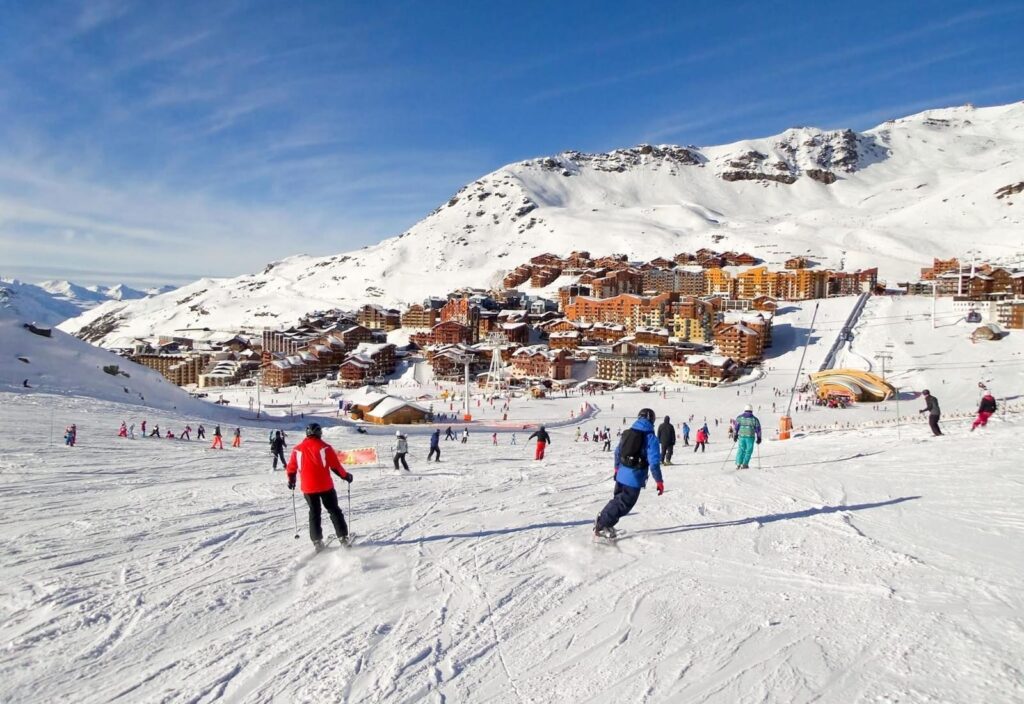
For me, this is one of the biggest advantages. There’s something wonderfully satisfying about skiing a fantastic run, arriving at the bottom and heading virtually straight back onto the lift to do it all over again. During peak weeks, the minutes spent waiting at lifts throughout each day can add up. Over six days of skiing, less time queuing can mean a surprising amount of extra time actually skiing. The pistes themselves are quieter too. You have more room to choose your turns, busy intersections are easier to negotiate and popular runs can remain enjoyable for longer. Essentially, you can be paying less while getting more mountain for your money. And that’s why most locals disappear during peak weeks!
Beginners May Notice the Difference Even More
If you’re learning to ski, quieter slopes can make an enormous difference. It’s difficult enough trying to remember what your instructor told you about your knees, poles and edges without worrying about streams of other skiers passing you on either side. Outside the busiest weeks, beginner areas tend to feel calmer and less intimidating. Equipment shops and lift-pass offices may also be less hectic and ski-school availability is generally better. Ski schools may have smaller group sizes and private instructors can be easier to secure, giving beginners the opportunity to learn in a more relaxed environment. For a first ski holiday, I’d certainly consider whether the busiest week of the season is really the best introduction to the mountains if you have the flexibility to travel at another time.
January: Cold, Quiet and Wonderfully Wintry
January has a special appeal. Once the New Year visitors have gone home, resorts become noticeably quieter. Temperatures are generally colder and the days shorter than later in the season, but that cold has an important advantage: it helps preserve the snow. Fresh snowfall combined with low temperatures can produce superb conditions and many experienced skiers particularly enjoy January for exactly that reason. There are compromises.
January can be very cold, particularly first thing in the morning, at altitude and on exposed chairlifts. The days are shorter too, so you won’t have quite the same long, sunny afternoons you might enjoy later in the season. But dress properly and there’s something rather special about skiing in the depths of winter: crisp mornings, snow-covered villages and that unmistakable midwinter Alpine atmosphere. If your priorities are good snow, quiet pistes and lots of skiing, January is difficult to beat.
March: Sunshine, Longer Days and Lunch on the Terrace
March offers a very different type of off-peak ski holiday. The days are longer, temperatures are generally milder and there’s far more opportunity to enjoy one of the great pleasures of skiing in France: a long lunch on a sunny mountain terrace. The skiing can still be excellent, particularly if you choose a high-altitude resort or one with plenty of high skiing. Resorts such as Val Thorens, Tignes and Val d’Isère can be particularly attractive choices at this time of year. Snow conditions can change more throughout the day in spring. Colder nights can leave pistes hard packed first thing before the sun gradually softens the snow, so knowing which slopes to ski and when can make a difference.
But that’s part of the pleasure of spring skiing. Ski in the morning, stop for a leisurely lunch and enjoy those increasingly warm afternoons in the mountains. For families with young children, beginners and anyone who finds January temperatures a little too bracing, March can be a fantastic alternative.
More Choice of Chalets
Peak weeks can sell extraordinarily early. Some of the most desirable chalets are booked many months in advance and occasionally more than a year ahead. I’ve seen some booked up to two years in advance! Families return to favourite properties and the best catered, ski-in/ski-out and luxury chalets can disappear quickly. Move your holiday by a few weeks and the choice can open up considerably. Instead of compromising on location, bedroom configuration or facilities because that’s all that’s left, you’re much more likely to have several genuinely suitable properties to choose from.
And finding the right chalet, rather than simply one that’s available, can make a huge difference to your holiday.
Restaurants and Holiday Extras Are Easier to Book
The difference doesn’t end when you leave the slopes. During peak weeks, sought-after restaurants can be booked well in advance and popular mountain terraces fill quickly. Off-peak, you’ll generally have more flexibility and the resorts themselves can feel noticeably calmer. The same applies to many of the other things that make a ski holiday run smoothly. Ski instructors, childcare providers, massage therapists, private chefs and transfer companies all experience enormous demand during peak weeks. Travelling outside them gives you a better chance of securing the provider you actually want, rather than simply whoever still has availability.
What About Taking Children Out of School?
This is where the decision becomes more complicated for families. Many families understandably travel during school holidays because it’s the most practical option and avoids disrupting their children’s education. However, the potentially significant difference in holiday cost means some parents will inevitably consider whether to travel during term time. There are obvious advantages from a ski-holiday perspective. As well as potentially paying less, children can learn on quieter slopes, spend less time queuing and may benefit from a calmer ski-school environment. The family budget may also stretch to a standard of chalet or holiday that simply isn’t affordable during February half-term.
But there are disadvantages that need to be weighed against those benefits. A week away means missing school and the impact of that will depend on the child’s age, their individual circumstances and what’s being taught that week. There are also school attendance rules to consider. For families in England, term-time holidays are not generally considered an exceptional circumstance and absence may not be authorised. Unauthorised absence can result in a penalty notice, so parents should check both the current rules and their school’s attendance policy before booking. Rules differ elsewhere in the UK.
Ultimately, whether the advantages outweigh the disadvantages is a decision for each family to make with their child’s education and individual circumstances in mind. If your children are pre-school age, however, you have a wonderful window of opportunity to enjoy those quieter weeks before school holidays begin dictating your travel dates.
Peak Weeks Still Have Their Place
None of this means peak weeks are bad times to ski. For many families, there simply isn’t another option. Travelling during school holidays means children don’t miss lessons and everyone can enjoy the holiday without worrying about school attendance. Christmas and New Year in the Alps can also be magical. February sits right in the heart of winter and Easter can bring wonderful spring skiing, particularly in the higher resorts. Peak weeks aren’t necessarily worse weeks for snow or skiing. They’re simply likely to be busier and more expensive. If that’s when you need to travel, the key is to book early. The sooner we start looking, the greater the choice of chalets and the better chance I have of finding the location, facilities and services you really want.
January or March: Which Should You Choose?
If you’re lucky enough to have a choice, it really depends on the type of holiday you’re looking for. Choose January if your priorities are cold winter conditions, good snow preservation, quiet pistes, excellent value and maximum skiing with minimum queuing. Choose March if you prefer longer days, more sunshine, milder temperatures, leisurely lunches on mountain terraces and a more relaxed spring atmosphere while still enjoying excellent skiing. For March, I’d generally recommend choosing a snow-sure resort with plenty of skiing at altitude.
So, Is Off-Peak Actually Better Than Peak?
If you have the freedom to choose your dates, I think it often can be. You can potentially pay less for your accommodation while having more properties to choose from. You spend less time queuing and more time skiing. Restaurants, ski school and other services are easier to book. Beginners have more space and the whole resort can feel more relaxed. And perhaps that’s the real luxury of travelling off-peak:
Space.
Space on the pistes. Space in the restaurants. Space in ski school. More accommodation to choose from and more room in your budget. Peak weeks will always be popular because they’re when many people have to travel. But if you don’t have to? I’d seriously consider not doing so.
Let Me Find the Right Off-Peak Week for You
Sometimes moving your ski holiday by just a week or two can completely change what is available for your budget. Tell me who’s travelling, the dates you could consider, your budget and what’s important to you and I’ll help you compare the possibilities across different weeks and resorts. You might decide to spend less. You might use the saving to upgrade to the chalet you thought was out of reach. Or you might simply decide that skiing the same mountains with fewer people around you sounds like a much better way to spend your holiday.
Whatever matters most to you, I’d love to help you find the right week, resort and chalet to make it happen. If you’re flexible with your dates, get in touch and let me help you find the off-peak week, resort and chalet that gives you the very best holiday for your budget.